My Experience at the Assessing Movement Conference
As a fitness professional who is striving to be the best they can be (aka I drop a lot of dollas on continuing education), you can imagine I was pretty ecstatic when I found out last October that there would be a “meeting” with Gray Cook and Stuart McGill in San Francisco.

Story of my life
It took approximately .02 seconds for me to hop online and book everything. News flash, Gray Cook and Stuart McGill are rock stars.
Like, the first time I met them, I cried and had them sign my chest.
Kidding….
But they are definitely A-list celebs of fitness. Gray founded the Functional Movement Screen, which is used by a bajillion fitness pros these days (myself included) to better screen their clients and help them move better. He is a leader of the “functional training” revolution and the paradigm shift of the old bodybuilding-isolation mentality to the more integrated movements you see in today’s programs.
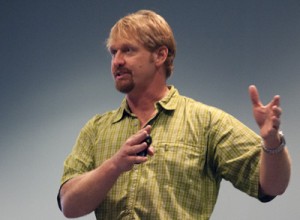
McGill is the world’s best with back pain. He is referenced pretty much every time I read anything about low-back injury mechanisms and is commonly referred to as the spine expert.
He also has the most epic stache of any living human. It makes everything he says completely profound. For this reason, I really wish he would take a run at the, “World’s Most Interesting Man” commercials.

Gray is the author of the “Movement” book and McGill wrote “Ultimate Back Fitness and Performance”, 2 must-have texts in our industry.
Alright, they are kind of a big deal, soooo why the meeting?
Well, there has been controversy brewing because Stu has come out with research over the years that doesn’t exactly support the efficacy of the FMS in certain situations.
Considering the FMS is viewed as a gold-standard screening tool, this brought out your typical social media banter that, of course, got way overly dramatic.
So when Craig Liebenson announced that he would be organizing a forum for them to share their views, peeps all over the world got excited.
“Finally, a chance for a showdown! Stu is going to smother Gray with his stache, and then Gray is going to use an FMS dowel to break McGill’s spine!”
Yeah, not quite.
Many got excited for a ferocious debate, but that’s not what this was about.
It was about 2 first-class professionals getting together to move our industry forward. They maturely embraced each other’s views and it was an amazing experience.
I naively thought that going in I was going to leave having the answers and a clear path of what to do with my client assessment model.
I was wrong.
As the day progressed, I realized I was going to end up with more questions. But that’s actually a great thing.
Because being able to ask more thought-provoking questions will lead to more insightful answers.
And that is what will make us better.
Gray and Stu were not there to say, “Hey, do XYZ and you will find every potential injury for your client and bullet-proof them with your program.”
No, they said many times that as professionals, it is our job to find the best tool for what we need to do with the evidence we have at our disposal.
As Gray said, “Set a standard and own it.”
They were just there to present everything they knew, up to today. From there, it is up to us to use what we need to, in order to get our clients moving better and achieving better results.
The Day Itself
The meeting was set-up so that Gray and Stu could alternate with their presentations, with question and answer sessions in between. I am going to present the highlights (in my opinion) of each lecture and the main takeaways I got from each. The points from each lecture are either their words exactly or a very close paraphrasing.
Gray’s First Lecture
#1: We tend to make 2 mistakes when screening. We either overlook or over-obsess. If you do this, you will no doubt find false positives.
#2: The FMS exists because we scrutinize functional methods without functional metrics.
#3: If a kid goes to speed camp, and you don’t use a stopwatch, the parent would question you. “How do you know if he got faster?”
But that’s essentially what we are doing when we don’t objectively screen movement. We just assume it’s getting better.
#4: The FMS is a weak link strategy. He posed the question, “Will movement ever have a minimum?” Nutrition and sleep have all of these standards, but why not movement?
#5: Gray is concerned with how LONG someone will be an athlete, not just their ability.
#6: He posed the question that if he took us all over to a shooting range and told us all to start shooting and judged who the best marksmen was, what element would be missing?
He would need to check our eyesight to standardize the results. Have to ensure visual competency before being asked to display it as a skill.
#7: The FMS does not predict injury. It helps manage it.
#8: Dentists got it right. They get insurance companies to pay another person to essentially brush your teeth once a year, in case they catch anything that could be harmful.
Why don’t we do this with the musculoskeletal system?
#8: Be vigilant about your client’s state of readiness. If they are not ready to train, why are you going to apply a stressor?
After all, you have 2 choices when you train;
Adapt or fail
#9: The best coaches are great at program constriction.
#10: Have a movement baseline. Once we knew what constituted hypertension, we could do something about it.
He mentioned at the end that he was NOT there to defend movement screening, because if they are used competently and correctly, they will justify their utility.
McGill’s 1st Lecture
Alright, that presentation was sensational, what was McGill going to say? Remember, the credibility of everything he says is 10x higher with his stache.
To give some background, McGill clarified he is representing the scientific community, so he presented a lot of research, which I will do my best to succinctly explain.
Also, he typically posed a question before presenting findings, so the questions are below.
#1: Can a movement screen predict movement in other tasks with movement?
He gave an example of a subject he tested who had an acceptable overhead squat. He then placed a coin in front of her and asked her to pick it up. She bent over from the waist, rounded her back, and locked out her knees.
Clearly, the constrained screen of the overhead squat did not predict the natural movement response with that basic task.
He then showed a picture of a 3 on the OH squat. The subject’s lumbar was in slight flexion at the bottom. McGill said he would not load that person’s back. He then put up a picture of someone with a 2 on that same screen. He said he would potentially load that person’s back.
#2: In a study done with subjects who scored a 20 on their FMS, they were given tasks that included speed and load. It showed that aberrant patterns still showed up (Frost et al 2014).
#3: The way someone chooses to move may be a predictor of injury
#4: Can coaching/feedback change the FMS score immediately?
In a study he helped conduct, they screened subjects with the FMS and 40% of subjects got < 14.
In the post-test, they stated what the scoring criteria were, and only 1 subject ended up with <14.
Movement dysfunction disappeared in 10 minutes (Frost, Beach, Callaghan, and Mcgill, JSCR).
Is it possible that some have movement competency, but don’t know how to express it? Or does the FMS actually capture dysfunction?
He concluded that it was a little of both.
#5: Stress and pain is changed by coaching movement, not by administering a “corrective exercise” program
#6: Can movement quality predict future injuries?
McGill presented several studies here, all showing that the FMS was a poor predictor of injury. The one that stuck out most to me was a study done by Michael Stuart Krackow that analyzed player position group, height, weight, and relative body weight and their relationship to scores on the FMS (Krackow, Dissertation, Virginia Polytechnic Institute).
It showed that athletes with deficient mobility/stability were less likely to sustain a non-contact injury. Athletes who demonstrated greater mobility/stability had more injuries, particularly non-contact.
It also showed that taller and heavier athletes had lower scores, while shorter and lighter athletes had higher scores.
Does the FMS need a proxy for size? It might be biased toward the shorter, lighter person. Maybe it is not enough to look at solely mobility and stability.
#7: In contingency tables McGill used, he found that the FMS did not predict injury better than a coin flip. However, it did predict those who did not get injured.
#8: McGill’s current opinion, based on the research available today;
- Screening has not kept pace with science
- He can only justify giving a valid assessment, since his goal is to provide helpful advice
- Screen only for specific injuries, there is insufficient evidence for general injury
- Screens must incorporate the injury mechanism
- Process must consider exposure, demand, and context
His presentation definitely got some thoughts stirring. I had not seen much of the research he presented, but one of the main goals of the day was to stimulate thought and challenge what we previously believed, which his work absolutely did.
Gray’s 2nd Lecture
#1: He embraced McGill’s work. “At least we are looking at movement.”
#2: The FMS seeks to identify pain before load is introduced. Don’t go down a rabbit hole looking for false positives.
#3: Make sure that what you are conveying to people is the best it can be with the evidence you have available.
McGill’s 2nd Lecture
#1: Injury risk is specific. Older person cares about falling, not about their shoulder mobility.
#2: For someone that suffers from overuse injuries and need specific screens, the FMS is not adequate (e.g. marathoner, golfer). For accidental injuries and general screens, it’s great.
#3: For a golfer that needs more external rotation on their driving hip, the ability to squat does not matter. Why not specifically test for hip ER?
#4: He put up a picture of a lady doing a horrendous clean and press. She had massive valgus collapse, among other flaws.
He posed the question, “Would you coach movement here or would you coach a corrective?”
#5: 2 people have gotten injured in his lab with instrumentation (powerlifter and firefighter). Both had a momentary lapse of motor control in a high-stress environment.
Is this aberrant, one-time movement flaw a hardware or software issue? Is there a mechanism we can correct?
#6: Fundamentally disagrees with using the FMS as a gold-standard screen. He does not believe it can properly guide “re-sets” to movement dysfunction. Dysfunction cannot be reliably detected with only simple movement tests and dysfunction cannot be corrected with exercise.
#7: He made the case that the ability to deep squat is genetic. It is primarily determined by the depth and diameter of the acetabulum (Maggs, Crabtree, Journal of Bone and Joint Surgery). He showed a few different pelvises and explained which one would be able to squat deep and which one would be more apt to sprinting. In many cases, the deep squat cannot be corrected.
#8: McGill’s Criticism of Correctives
- It’s not always mobility before stability, especially for backs
#9: McGill’s Self-Criticism
- His probing approach is difficult to teach
- His assessment is “living” and there is no SOP
- FMS is systematic and easy to learn, which is an advantage
#10: McGill’s Approach
- Wants to see natural movement
- May not suggest correctives, but rather, ways to move
- Gets a lot from seeing them in waiting room and walking to assessment room. Must have idea of their demand and exposure.
- Doesn’t do general assessments, it’s always specific
- Assesses what joints are capable of, whether the technique is appropriate to their goals, and decides what tasks to avoid
- He seeks to encode patterns, which is a point of agreeance he has with Gray
#11: FMS may find no pain, but sport may still cause pain. He used an example of a golfer he worked with that had no movement flaws, but his swing caused pain. McGill did some provocative tests to reveal mechanism, did some movement coaching, and prescribed a few specific exercises to clear pain.
#12: The more elite someone is, the more he leaves them alone.
#13: Real world is chaotic, so assessment needs to represent that.
#14: Learn all the tools you can. There is a time for SOP, but assessment needs to be “living”
That wrapped up the morning sessions. Great stuff, but I was ready to dirty bulk out on campus, and you better believe I inhaled that turkey avocado wrap.
Liebenson played Macklemore’s, Thrift Shop, before the afternoon session started. I’m not sure why, but that was pretty amazing. He apparently does it at all of his seminars.
For my future seminars, I will play, “Whip My Hair” by Willow Smith. Don’t ask why.

Gray kicked off the afternoon by dropping more knowledge, but I want to focus on McGill’s lecture that had a bit more practicality to it than his research-based morning talk.
McGill’s 3rd Lecture
Instead of listing points, I will just explain what he did. So after reading this far, you understand McGill likes to get specific and see where someone’s injury mechanisms show up.
He called up an audience member and had him sit slouched. When he told him to straighten up, the guy extended through his thoracic spine. McGill coached him on posteriorly tilting his pelvis and his posture looked a lot better.
He took that same subject and put him in quadruped. He told him to sit back until his sacrum “broke”. He had the guy spread his knees until he could sit back butt to heels without his sacrum breaking. This is one way McGill determines someone’s squat-width.
After that, he called on someone purposely that said they did not move great. He had this guy perform a hinge and, naturally, it looked pretty ugly. To fix it, he had him get into a shortstop pose, perform an “anti-shrug”, and then stand, extending through the glutes. He also cued him to grip the ground with his feet and drive his knees into his hands.
Within minutes, the subject’s hinge mechanics cleared up. It wasn’t perfect, but it was vastly improved.
I’m not gonna lie, for some reason, I didn’t expect McGill to have the coaching ability that he did. Maybe it was because I thought he peered over journals and computers all day, but this guy could flat-out coach! He was very blunt and made it clear what he wanted out of each movement. He had great energy and he had a knack for getting what he wanted out of people. Very impressive.
After McGill’s final lecture, Liebenson gave a great talk, and that was followed up by Cook and McGill’s closing comments.
While they were both up on stage, they talked about how they take different paths, but tend to find the same conclusions. McGill mentioned that he does things like this (which he does not speak very often, and actually mentioned when we thanked him before we left that getting up on stage is a hard thing for him to do) to get asked questions that he does not know the answer to.
For a guy like him to say something like that just shows the humility of his character. And that humility applies to Gray as well, who embraced having something that he founded be put under the microscope and challenged.
Speaking of that, Gray said a couple times that he is just waiting for a GPS, but for now we have a good compass to use, referring to the fact that he welcomes someone to come up with something better than the FMS.
Anyway, they basically said that you have to find the tool that works best for you, set your standards, and then own it. Sound advice, and a fitting conclusion to the day.
My Commentary
After having pored over my notes the past few days, I was trying to decide what I thought about everything.
How does the information I learned apply to me? My clients?
First off, I am a big fan of the FMS. Maybe that makes me a little biased. I love systems and the systematic nature of the screen and its corrective strategies really appeals to me. And more importantly, I have seen it work with my clients.
I definitely understood where McGill was coming from, but at this point in time, I can’t just look at someone, check out a few techniques, and just sort of “wing it”. That’s not my style. I have to have a baseline. There has to be some sort of objectivity. I don’t care if that objectivity is not yet supported by a hundred studies. I know if I can get someone performing better on the screen, they tend to feel and perform better. I primarily work with “generalists” as McGill calls them, so maybe I would draw a different conclusion if I worked with more specialists. He is also 100x smarter than me at evaluating people.
Second, I can’t justify putting someone under load, adding speed, and seeing where they “break”. I wouldn’t have any confidence in court telling a judge that I blew out someone’s knee because I was pushing them at a high level without first having cleared their movement competency. I don’t want to see someone’s form break down under load at any time, much less in an assessment.
I’m all for coaching good movement, but I need to have some idea of what I am working with first.
The screen may or may not be the best at capturing dysfunction, but I feel like that’s where smart program design, solid coaching, and appropriate progressions and regressions comes in.
I want to find compensations in a bodyweight setting and then plan for that in my programs. I don’t want to start viewing compensations in a 300-pound squat. I want to see compensations in a bodyweight squat.
And I also can’t justify saying that some people don’t need certain basic human movement patterns, such as the golfer McGill referenced. Sure, some specialists will need certain patterns more than others, but I can’t justify saying that someone doesn’t need the ability to squat.
What do golfers do when they bend down to see the line of a putt? I understand they usually compensate by leaning on the putter, but it doesn’t seem right to not give them a sound general movement base before getting into specific movement skills. Plus, they take deuces, too, right?
Like I said, I understand where McGill is coming from, and I completely understand the need for specific assessments. I just don’t see them as being the first thing I go to with a new client. But then again, he works with a lot of very high-level athletes and he tends to be the last hope for a lot of them. Clearly, his assessment approach works for him and he is brilliant, which I think is a big reason why his style works. He mentioned several times that context is a big part of screening.
And that brings me to my main point. Cook and McGill have different approaches, but all in all, their goal is to maximize someone’s performance by eliminating movement dysfunction.
Sure, there are a few fundamental differences here and there, but that’s the primary takeaway. These 2 great professionals have made amazing careers getting great results for people. You can’t argue with that.
For myself, I’m not overhauling anything I currently do. I’m just going to take all of the information I learned and see how I can best tinker with my assessments and programming. For the time being, I am going to continue using the FMS as a primary screening tool until the “GPS” comes about, but will keep in mind all of Stu’s research.
I left with my brain on the floor and feeling inspired. It was a truly fantastic day. I am excited to continue my growth as a professional, and as Gray mentioned in his closing comments, question everything I do. I can only hope to help people the best that I can with the evidence I have available.
And after this weekend, I know I will be able to do just that.
Victory.
Thank you Gray, Stu, and Craig.
*I would love to hear your thoughts on the information I presented. I welcome any disagreement. I hope that I was able to convey the main messages of the day and accurately represent their thought processes. If you want further information, definitely send me a message or drop a comment below. By no means, did I cover anywhere close to all the notes I had!
Take the Leap,
Kasey, CSCS
Learn more about what I am all about and pick up some great tips to transform your physique by signing up for my 5-day e-course HERE
Find me on Facebook
Connect with me on Twitter
Subscribe to my YouTube Channel
Pingback: Random Thoughts | Bret Contreras()
Pingback: Movement Relativism? | Better Movement()